
Background
Marine biomass, and seaweed in particular, represents a largely underutilised resource with exceptional potential to contribute to these objectives. Seaweed grows without freshwater, arable land, or fertilisers, and can serve as a sustainable input to a wide range of products and industries. Yet, despite this promise, Nordic seaweed-based industries have struggled to scale due to fragmented value chains, inefficient processing methods, and limited commercial viability.
Project objectives
Seaweed is abundant and sustainable, but current processing methods extract only a fraction of its value — making profitable business models difficult to achieve.
This project will demonstrate a zero-waste seaweed biorefinery based on a proprietary extraction protocol developed by Verdemar. By processing the full biomass, the biorefinery can produce multiple high-value outputs simultaneously — ranging from food ingredients to cosmetics.
Over 24 months, a consortium will build and operate a pilot production line, advancing the technology from TRL 6 to TRL 7–8 across three phases:
- Build the production line and run initial tests
- Optimize processes and develop products
- Validate results and prepare for scale-up
The pilot will document stable yields and measurable reductions in time, energy, and chemical use compared to conventional methods. Techno-economic analysis (TEA) and life cycle assessments (LCA) will support sustainability tracking and reduce investment risk.
Expected outcomes
- Verdemar targets NOK 250 million in revenue by 2030
- BASF has expressed interest in purchasing extracted materials for export
- Partner Ocean Rainforest wants to adopt Verdemar's protocol once validated at TRL 7
- Seaweed-based materials can partly replace fossil-based inputs and contribute to carbon sequestration
By the end of the project, the biorefinery should have paying customers, validated products, and established green value chains. Next steps include scaling, replication in new locations, and international rollout through licensing or joint ventures.
Nordic added value
This project supports the Nordic Vision 2030 by turning an underused marine resource into a foundation for green industrial growth. A zero-waste seaweed biorefinery creates a circular value chain — from coastline to end-product — and reduces dependence on fossil-based materials.
Benefits for Nordic businesses
- Seaweed farming and processing become viable industrial activities
- Downstream companies gain access to high-quality, sustainably produced bio-based inputs
- Lower barriers to innovation in food, cosmetics, and advanced materials
A key ambition is to keep industrial knowledge and value creation within the Nordic region. Verdemar's extraction protocol will be validated and scaled through regional collaboration, strengthening competitiveness and reducing reliance on imported materials and technologies.
No single country has the full combination of resources, partners, research capacity, and application diversity needed to demonstrate a viable multi-output biorefinery. The project therefore draws on complementary strengths:
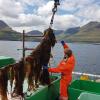
- Seaweed farming in Norway and the Faroe Islands
- Scientific material validation in Sweden
- End-product development in Norway, Sweden, Finland, and Åland
This model enables scale, shared learning, and faster market uptake — while positioning the Nordic region as a global leader in marine biorefinery technology and sustainable bio-based materials, with export potential for both products and processing know-how.
Project partners
| Verdemar AS - project lead | Norway |
| KTH - Royal Institute of Technology | Sweden |
| Ocean Rainforest | Faroe Islands |
| Lerøy Seafood AS | Norway |
| PurSea AS | Norway |
| Under Ytan AB | Finland |
| Woamy Oy | Finland |
| Taramar Seeds ehf | Iceland |
| byArctic AS | Norway |