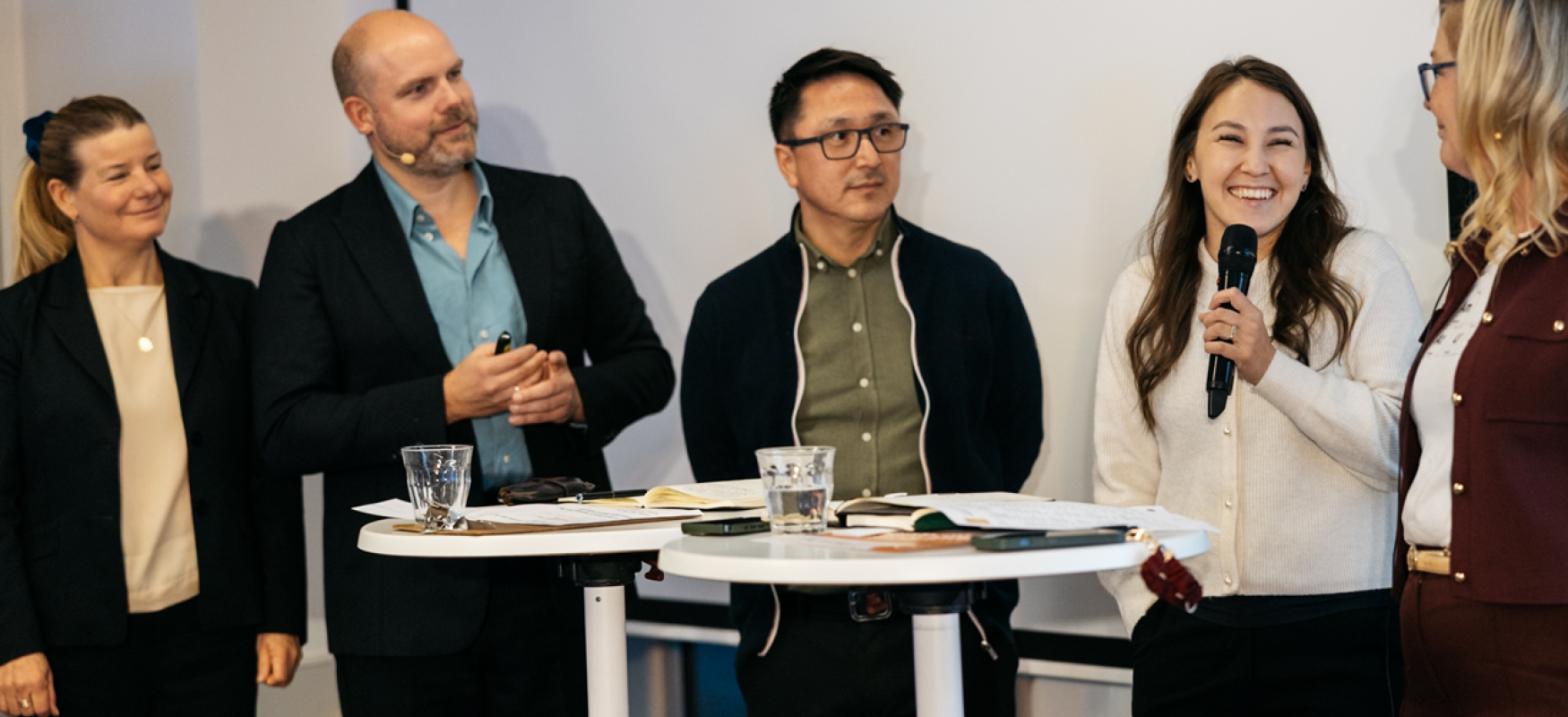
On 19-20 November the 6th Nordic Circular Summit took place, and for the first time in the autonomous region, Nuuk, Greenland. Under the title ‘Circular Frontiers: Shaping our Future’ the summit, among other things, discussed how Arctic and Nordic communities can shape the next wave of circular innovation.
Read more about Nordic Circular Summit
Re-introducing circular principles in modern businesses
The session ‘Arctic and Nordic lifestyles’ discussed how Inuit traditions can inspire modern production and global businesses in all sectors.
Mia Chemnitz is Managing Director of Qiviut Inc, a company that produces clothing from Arctic animals such as seals and musk ox. Chemnitz shared insights into their supply chain and product development:
“All the materials that we sell are bought from local hunters. The hunter shoots the animal to get its meat, and then we buy it to get the skin, wool and so on.”
Chemnitz also explained how the company is prioritizing value creation in Greenland by keeping all levels of the supply chain in Greenland.
Kristian Ottesen is Head of Process Optimization and Resource Efficiency at Royal Greenland. He explained how Greenlandic culture, which is rooted in minimizing waste, supports his work with side streams:
“The culture has a huge impact on my work. Fisheries are so important in Greenland. My work with side streams is easier because of the culture in Greenland of using all parts of the fish and the animal and so on. The culture in Greenland makes circularity easier.”
Ottesen also underscored that circularity is not a new intervention, but something that needs to be re-introduced in modern businesses:
“Along with the industrialization of the fisheries, we have forgotten some of these practices. We need to reintroduce these principles, not reinvent the wheel, but simply reintroduce the principles of using all parts of the animal,” he explains.
Minimizing seafood waste
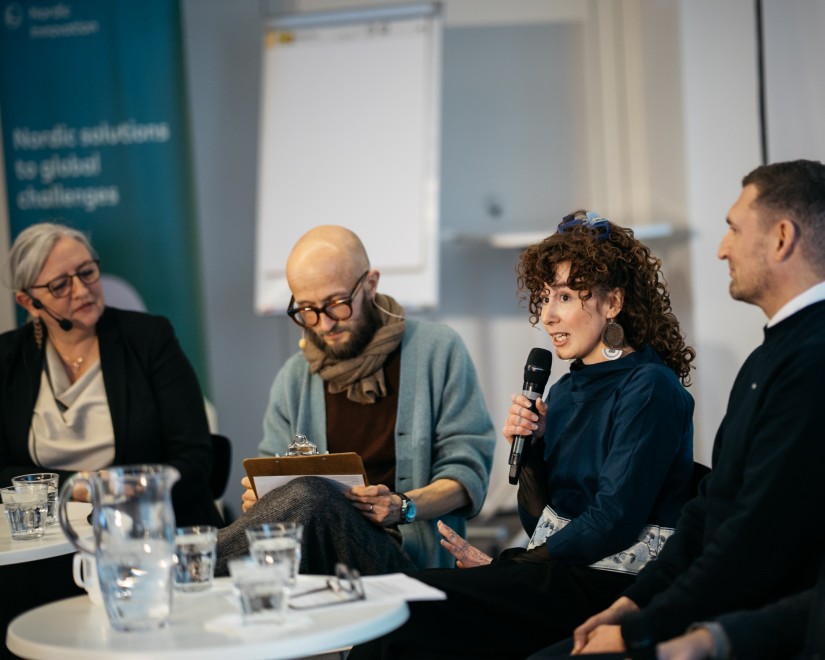
In the session ‘Ocean Industries’ Alexandra Leeper from Iceland Ocean Cluster, Michaela Lundström from Hailia Nordic and Kristian Ottesen from Royal Greenland shared concrete examples of circular solutions and methods from the ocean industries.
Michaela Lundström is an entrepreneur and founder of the company Hailia Nordic, a company that aims to increase the utilization of fish through side streams.
“15% of global seafood is wasted during filleting. So much food is lost. We need to utilize the fish for food in a smarter way,” Lundström says.
Lundström explained how their solution turns fish side streams into food:
“If we want people to eat side streams, it needs to be a product that tastes and feels like familiar sea food. We need to work with sea food processors if we want to make a solution that actually matters.”
Kristian Ottesen spoke about the 100% Shrimp project, a project supported by Nordic Innovation with the aim of minimizing waste and creating more food from shrimp production.
“We call it a fast track to circular sea food supply chains in the Nordics,” Ottesen explains before continuing:
“In our factory in Ilulissat, we produce between 12.000-15.000 tons of shrimps annually. That is the raw material we get in. Out of that, we only get around 34-44% utilization depending on seasonal variations and so on. That means that historically, between 56-66% have been discarded of these products. That means we are discarding up to 7.000-10.000 tons of biomass every year.”
“Through the 100% Shimp project, we are creating a process where we can use the shells, and the heads from the pealing process. There will always be waste in production, but with this project we try to get as close to 100% as possible,” Ottesen adds.

Mining should go hand in hand with circularity
Nordic Circular Summit 2025 also highlighted the global interest in Greenland as a hotspot for mining.
Malena Vahl Rasmussen is Mayor of Kujalleq Municipality in southern Greenland.
“South Greenland is home for all the critical minerals in Greenland. The activities in the past few years have increased a lot. What we are seeing is a big international interest. And the interest is based on our critical minerals only. They want to make sure to have the deposits in case China one day will close their mines,” Vahl Rasmussen says.
Mika Sulkinoja from the Finnish Innovation Fund from Sitra underscored that critical minerals are essential, but that mining needs to go hand in hand with circularity:
“Europe exports the materials that it needs the most which is a paradox. Circularity is now a matter of competitiveness and security. We will still need mining in the years ahead. But how do we combine responsible mining with circularity? We need both, but circularity must define the long-term path. Longer product-lifetime means better resilience.”
The summit also discussed the potential for turning the Nordic region into a testbed for circular solutions. Michel Bajuk from Nordic Circular Hotspot emphasized that the Nordics has good opportunities for creating a testbed environment, but that the national politics is lagging behind:
“In my mind there are two critical areas. Number one is that we are very good at collaboration, design thinking and technology. We have trust and a sense of responsibility. This gives us the opportunity to experiment and fail which gives us a good basis for test beds. However, politics is the second critical area. We have an excellent environment for test bedding circular solutions in the Nordics, but our national politics needs to align much better with the targets set and with the ambitions of the European Union,” Bajuk explains.
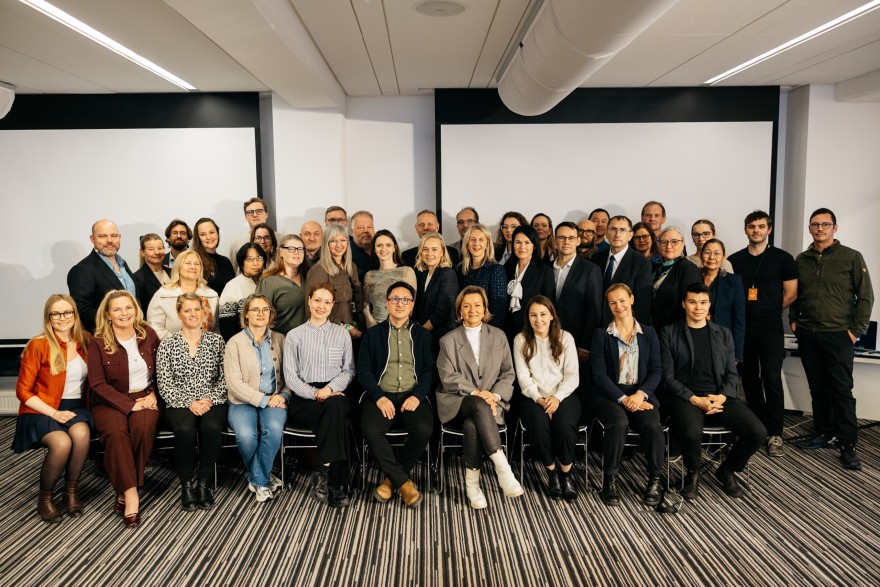
Nordic Circular Summit is organized in collaboration with Nordic Circular Hotspot and the partners Natural State, Cradlenet and Lifestyle and Design Cluster. In 2025, the event was co-organized with the Greenlandic partners Nalik Ventures and Greenland Business Association.
Read more about Nordic Circular Summit